
Welding Fume Control
Welding Fume Is Serious. Action Is Required.
The important point to understand is that while the risk posed by welding fume is serious, keeping yourself safe can be straightforward. Recognising welding fume as carcinogenic and the other associated health risks should encourage all employers of welders to review their risk assessments and revise their control measures. Action is required.
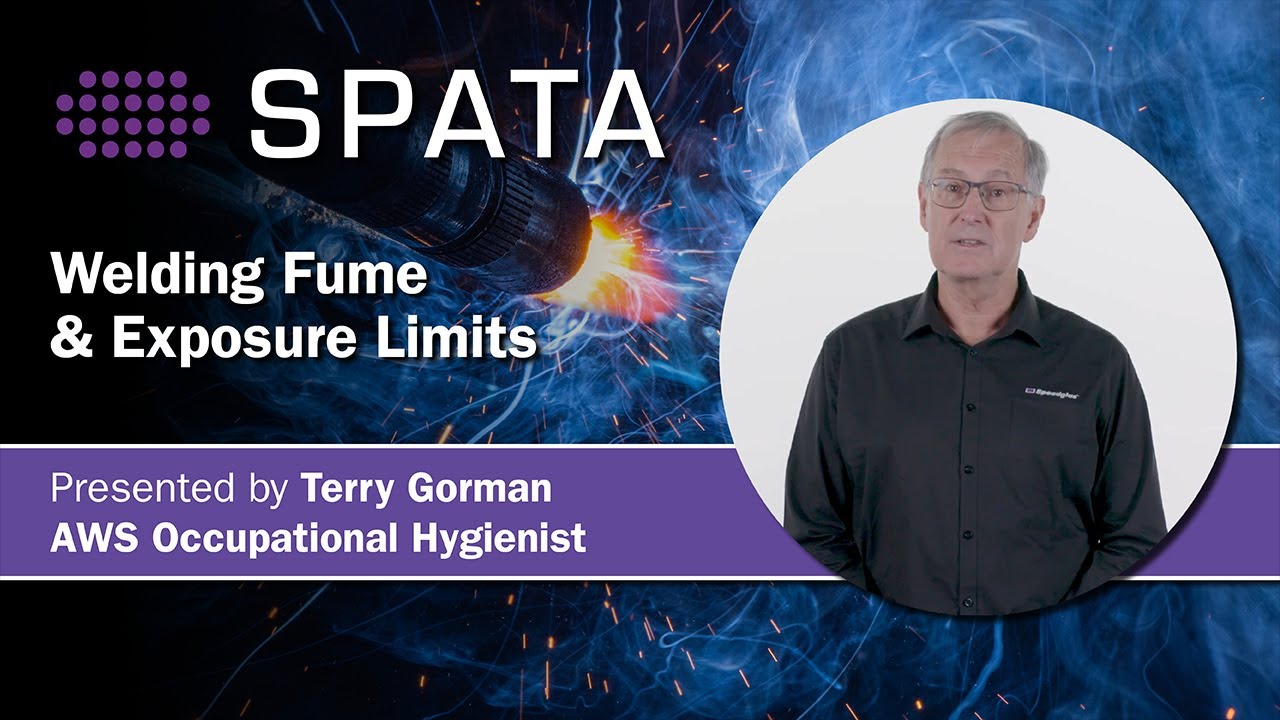
In this video we look at the dangers posed by welding fume so that we can understand the risk associated with not wearing respiratory protection. We then look at what level of protection is required by law and what must be done if you are unsure of the level of fume exposures at your workplace. Finally, we take a look at what level of protection a Welding Helmet with integrated Powered Air Respiratory Protection can offer.
NEW Practical Guide to Welding Fume Control
The Practical Guide to Welding Fume Control has become an industry favourite, providing clear, simple, and practical guidance on welding fume and is based on a simple premise - the health risk posed by welding fume is serious, however, keeping yourself safe can be straightforward. Now backed with new scientific research the Practical Guide to Welding Fume Control is even better!
Download Brochure View BrochureWelding Fume Control Product Selector
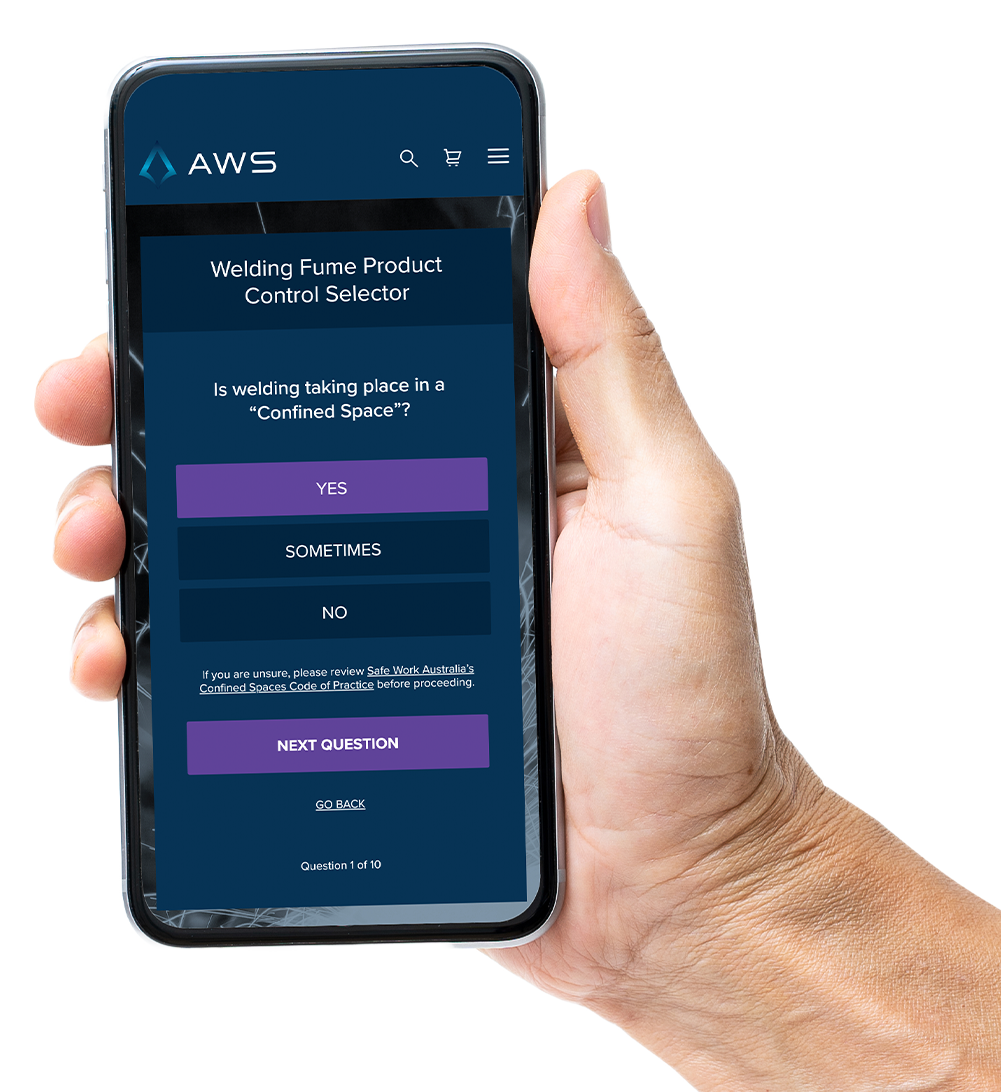
Discover which product controls are the most effective based on your specific circumstances.
Use the selector tool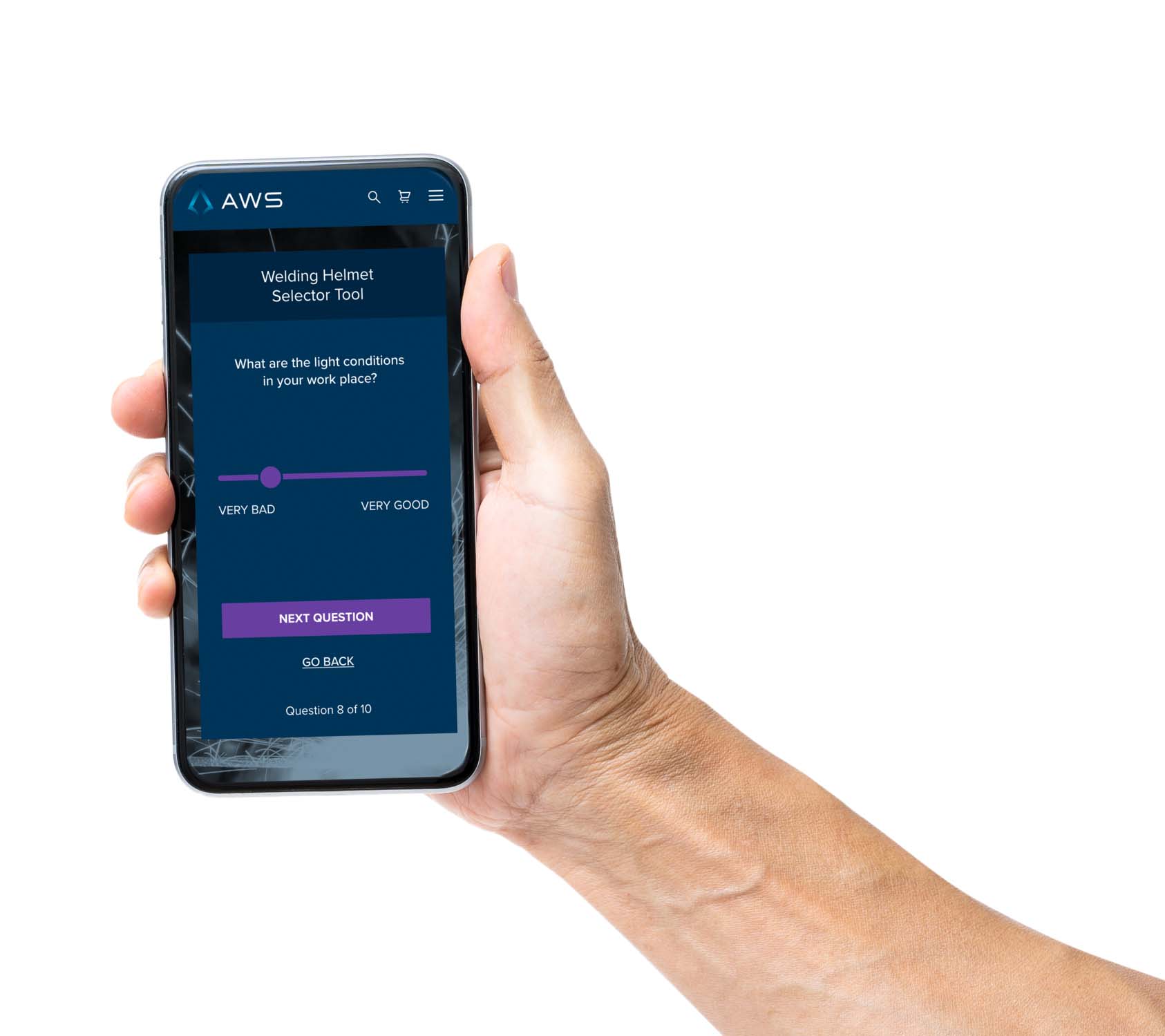
NEW Practical Guide to Welding Fume Control
The Practical Guide to Welding Fume Control has become an industry favourite, providing clear, simple, and practical guidance on welding fume and is based on a simple premise - the health risk posed by welding fume is serious, however, keeping yourself safe can be straightforward. Now backed with new scientific research the Practical Guide to Welding Fume Control is even better!
Download BrochureWelding Fume Control Product Selector
Discover which product controls are the most effective based on your specific circumstances.
Welding Fume Control
When it comes to welding fume, all efforts should be made to mitigate the risks where possible. While the highest levels of controls - Elimination and Substitution - within the ‘hierarchy of control’ give the highest level of protection and reliability in many industries, they are often not practicable or possible when it comes to controlling welding fume.
Even when you can mitigate risk, if there is welding to be done, there will be welding fume. Welding fume is inherent in the process of welding. As a result, we see that in the welding industry, the higher levels of control can only mitigate the risks associated with welding fume, making the lower levels of control essential.
In this video, we run through the ‘Hierarchy of Control’ from a practical perspective and learn how it can be applied in reducing exposure to welding fume.

Product Controls
While care must be taken to mitigate risk, if welding is to be done, welding fume will be present. As a result, product controls will be essential.
Use our Welding Fume Control Product Selector to select the product control solution that is best suited to your specific needs and requirements or read on below to learn more about each type of welding fume product control.
Welding Fume Control Product SelectorWelding Personal Protective Equipment (PPE)
In relation to the hierarchy of controls, PPE is often referred to as the last resort. When it comes to welding, suitable PPE must always be worn. PPE for respiratory protection from welding fume is commonly available in two main forms: 1) Welding helmets with integrated respiratory protection and 2) Half mask respirators.
1: Welding Helmets with Integrated Respiratory Protection
‘Welding helmets with integrated powered air purifying respirators (PAPR) are the most widely used form of respiratory protection amongst welders in Australia and New Zealand’¹ and are mandatory within many businesses. Watch this video to learn more about the different options available:

2: Half mask respirators
Disposable or reusable half mask respirators can be worn underneath a welding helmet to provide a RMPF of 10. The welder must be fit tested (annually is recommended) and clean shaven to ensure an effective negative pressure seal.
When compared to disposable and reusable half-face mask respiratory protection, PAPRs provide superior respiratory protection and comfort and do not require fit testing or a complete clean-shaven condition.
| Welding Helmets with Integrated Respiratory Protection |
Half Mask Respirators | |
| Protection Factor (RMPF) | 50 | 10 |
| Fit Testing Required | No | Yes, recommended annually |
| Requirement to be Clean Shaven | No | Yes |
| Breathing Resistance | No | Yes |
| Comfort Considerations | Steady flow of fresh air helps to cool and reduces sweat and heat build-up | The negative pressure seal can result in an uncomfortable fit in welding conditions (sweat, heat). Can interfere with the welding helmet |
| Cost Considerations | A PAPR draws air into the system from behind the welder away from the greatest concentration of welding fume. For this reason, the filters on a PAPR will typically need to be changed far less frequently than a disposable respirator or reusable respiratory filters. Long term, a PAPR can be the more economical solution | While half mask respirators have a lower upfront cost, they can be the more expensive long-term option. Worn on the welder’s face in closer proximity to the plume, filters can become loaded extremely quickly in certain welding environments |
Engineering Controls – LEV Extraction
Properly located Local Exhaust Ventilation (LEV) can capture welding fume at the source, and unlike PPE, remove it from the general environment. Popular options consist of fixed installations, portable systems, and on-gun extraction. It is recommended that respiratory PPE (see previous section) is always worn in combination with LEV. It’s important to understand that dilution ventilation or ‘general shop ventilation’, as it is known in the industry, and natural ventilation (e.g. opening a roller door to allow cross breeze) are not reliable ways of diluting or dispersing welding fume. Other controls must be introduced in combination.
Here we take a look at some of the more popular and practical LEV options available:
On-Gun LEV Fume Extraction
On-gun fume extraction is one of the most practical welding fume control solutions available, as not only does it capture welding fume at the source and remove it from the environment, it also follows the welder as they move. No other form of welding fume control offers this combination. In the past, welders have avoided on-gun extraction as it added weight to the welding gun, was cumbersome to manoeuvre, and had the potential to disturb the shielding gas. As technology has advanced, quality on-gun torches are the same size and weight as normal welding guns and offer extremely high capture rates without affecting the shielding gas, making them an ideal solution to control welding fume.
Portable LEV Fume Extraction
Portable LEV fume extractors, as the name suggests, can be carried, or manoeuvred around the workplace to provide highly effective protection from welding fume. Portable solutions can be the more economical option when compared to other forms of LEV, especially fixed installations, and are an extremely practical solution for welders who need to move around the workshop.
New Scientific Research on the Effectiveness of Product Controls
In 2022, an Australian independent scientific study was conducted to compare the effectiveness of welding fume product controls. The study was peer reviewed and published to the Safety Journal in 2023. The key findings of the study were as follows:
1.
A Welding Helmet with an Integrated Powered Air Purifying Respirator was by far the most effective control measure in protecting the welder from welding fume exposure when compared to On-Gun Fume Extraction and Fixed LEV Hood Capture, with a reduction in exposure of at least 99.96%.²
2.
The Welding Helmet with an Integrated Powered Air Purifying Respirator provided an Effective Protection Factor (EPF) of at least 2,600. Meaning a PAPR could reduce welding fume exposure to at least 1/2600th of the outside concentration. This shows a level of performance at least 52 times better than the required minimum protection factor of 50 as specified in AS/NZS 1715:2009.²
3.
On-Gun Fume Extraction was 33% more effective than Fixed LEV Hood Capture (fixed/portable) in extracting welding fume from the environment. On-Gun fume extraction was able to extract up to 98% of the welding fume with an average of 90% across all tests.²
Administrative Controls
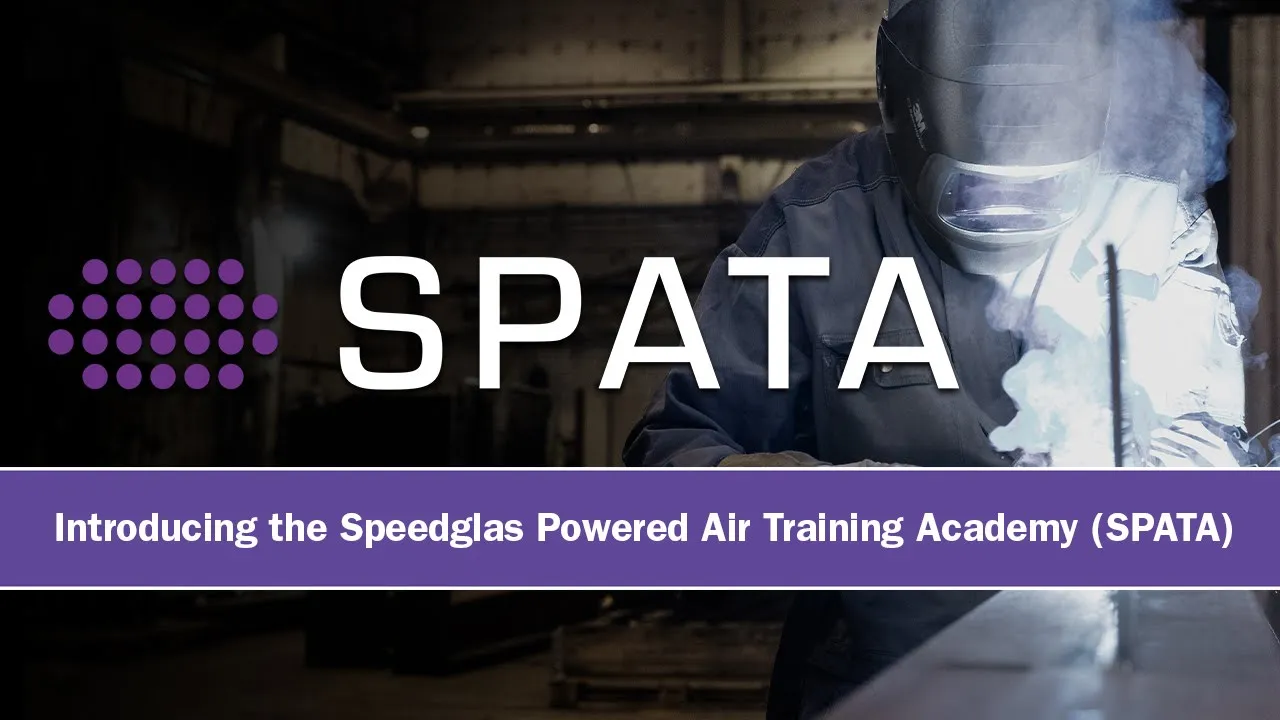
Once you have selected the appropriate PPE for your welders, occupational health and safety legislation requires employers to provide the welder with information, training, and instruction in the proper use of that PPE. AWS has recently launched the Speedglas Powered Air Training Academy (SPATA) to provide workplaces with a set of training modules to educate and train staff in line with the suggested syllabus set out in the Australian and New Zealand Standard 1715 Section 7 for workers using respiratory protective equipment. Watch the video below to learn more about SPATA.
For LEV systems, you must implement a maintenance and test regime to ensure proper operation. Ensure you select suppliers who can not only provide equipment, but also administer the required training and support. Also, ensure suppliers stock all required spare parts and they are always readily available to support.
Pulling it all together – Practical Guidance
Pulling it all together
– Practical Guidance
In Australia and New Zealand, by law, workplaces must take action to reduce welding fume exposure in the workplace. Based on the conclusions of the 2022 welding fume product control study² and what’s most practical for the welder, the following guidance is offered to reduce welding fume exposure to as low as reasonably practicable when welding using the most common materials (aluminium, steel, stainless steel, galvanised steel etc.) in environments with good ventilation*:
Protecting the welder from welding fume*:
- Introduce Powered Air Purifying Respirators. Powered Air Purifying Respirators are the most effective and practical welding fume product control and offer integrated eye and face protection with optional hearing and head protection.
- Ensure staff are trained in the proper use and maintenance of the PAPR. Many suppliers offer in-person and online training programs for free.
- Remove surface coatings and look to mitigate risk through introducing less hazardous materials where possible.
- Workers should position themselves to ensure they keep their heads away from the plume where possible and take advantage of any ventilation available.
Removing fume from the environment - protecting surrounding workers*:
- Introduce a dedicated area for welding away from other workers and restrict access to this area where possible.
- Introduce Local Exhaust Ventilation in combination with a Powered Air Purifying Respirator to protect the welder and control the spread of welding fume throughout the environment. On-gun fume extraction is the most effective and practical engineering LEV welding fume control.
- Have staff trained in the proper use and maintenance of LEV. Many suppliers offer in-person training for free.
Other Environments
If you are looking for guidance on welding fume product controls in other environments either use the welding fume product control selector or get in touch with AWS below.
Who is responsible?
The employer has the primary responsibility to ensure that welding fume exposure is controlled, and welders are protected. The two key points regarding employer responsibility are as follows:
- If employers are unsure whether the welding fume exposures at their workplace exceeds the relevant exposure standard, OH&S regulations require that they must ensure air monitoring is carried out.
- Under both the Australian Work, Health and Safety Laws and the New Zealand Health and Safety at Work Regulations, the employer is financially responsible for providing PPE to workers and must not charge anyone for using PPE.
When selecting suitable PPE, the employer, where reasonable, should consult with the welders. A welder’s knowledge, experience and personal preferences improve the overall decision-making process. As someone who is directly affected by welding hazards, a welder is entitled to take part in the consultation process and selection of suitable PPE.
Exposure limits are just the beginning
Exposure limits
are just the beginning
The exposure standards in Australia and New Zealand ‘do not identify a dividing line between a healthy or unhealthy working environment’³. They simply establish a legal maximum upper limit. ‘Therefore, exposure standards should not be considered as representing an acceptable level of exposure to workers’³. Take for example, a welder operating within the previous workplace exposure standards for general welding fume (5 mg/m³). If the welder was wearing no respiratory Personal Protective Equipment (PPE), they could inhale up to 11 grams of a carcinogenic substance (welding fume) every year.
Following the 2024 decision to lower the workplace exposure standard to 1mg/m³, Australian companies are now completely changing their stance on welding fume and welders' PPE. This reduction in the standard sends a clear message to the welding industry: welding fume is serious and action is required.
NEW Practical Guide to Welding Fume Control
The Practical Guide to Welding Fume Control has become an industry favourite, providing clear, simple, and practical guidance on welding fume and is based on a simple premise - the health risk posed by welding fume is serious, however, keeping yourself safe can be straightforward. Now backed with new scientific research the Practical Guide to Welding Fume Control is even better!
Download Brochure View BrochureWelding Fume Control Product Selector
Discover which product controls are the most effective based on your specific circumstances.
Use the selector tool
NEW Practical Guide to Welding Fume Control
The Practical Guide to Welding Fume Control has become an industry favourite, providing clear, simple, and practical guidance on welding fume and is based on a simple premise - the health risk posed by welding fume is serious, however, keeping yourself safe can be straightforward. Now backed with new scientific research the Practical Guide to Welding Fume Control is even better!
Download BrochureWelding Fume Control Product Selector
Discover which product controls are the most effective based on your specific circumstances.
NEW Welding Fume Workplace Exposure Standard
In January 2024, a lower Workplace Exposure Standard for Welding Fume was officially implemented in Australia. Work Health and Safety Ministers endorsed the decision to change legislation, lowering the Workplace Exposure Standard for Welding Fume from 5mg/m3 to 1mg/m3. This means that, by law, all workplaces must now comply with the lower limit – which applies to welders and anyone working around welders.
Unlike many industries, welders have personal protective equipment specifically designed for their occupation to protect them from welding fume and other welding hazards – a welding helmet with a powered air purifying respirator. Based on the results of the 2022 scientific study², a PAPR correctly worn and maintained, will ensure that the welder is well below all relevant WES for most common welding applications*, and can reduce welding fume exposure by a factor of at least 2,600 corresponding to a minimum 99.96% reduction.²
Australian and New Zealand companies are now completely changing their stance on welding fume and welders’ PPE. The 2017 reclassification of welding fume as carcinogenic prompted many to rethink and challenge what was historically considered ‘normal’.
The 2019 statistical analysis concluding that welders have a 43% increased risk of lung cancer regardless of the type of steel welded, the welding process or time-period is of serious public health relevance.
The 2019 statistical analysis concluding that welders have a 43% increased risk of lung cancer regardless of the type of steel welded, the welding process or time-period is of serious public health relevance.
Now, the 2022 study on welding fume product control effectiveness gives workplaces actionable guidance on how to protect their workers based on scientific data.
Being aware of information like this should act as the trigger at your workplace to introduce PPE with higher protection factors to give exposed workers the protection they deserve.
David Chippendale
David has worked in the welding safety industry for over 18 years and has authored numerous Welding Fume Safety White Papers, Welding Industry Reports, and Welding Fume Control Frameworks. He is a member of the Welding Safety Council made up of industry and legislative safety authorities, sat on the advisory group for the NSW Centre for Work Health and Safety in quantifying and assessing the burden of harm associated with welding fumes, and heads up the marketing, business support, and technical sales teams at AWS.
Terry Gorman
Terry is a Certified Occupational Hygienist and Fellow of the Australian Institute of Occupational Hygienists (AIOH) who has worked in the field of workplace safety for over 30 years and specialised in respiratory protection for over 20 years. He is a current member of the Australian Standard Committee responsible for respiratory protection as well as on the Eye/Face Protection Standards Committee. He currently represents Standards Australia on the International Standards Organisation (ISO) Committee TC94/SC15, a team of international specialists creating a set of global respiratory standards that are intended to become the Australian Respiratory Protection Standards when complete.
References:
- 1) 2020 Welding Fume and Respiratory Protection Survey, AWS
- 2) 2023 Peter Knott, Georgia Csorba, Dustin Bennett, Ryan Kift. Welding fume; a comparison study of industry used control methods. Safety Journal.
- 3) Guidance on the interpretation of workplace exposure standards for airborne contaminants, Safe Work Australia, April 2013
- 4) 2019 Honaryar MK, Lunn RM, Luce D, et al. Occup Environ Med
*Please note that while the findings are unique to the study parameters and conditions, the reduction factors and effective protection factors from this study provide valuable guidance for industry. This study and the information provided above does not address confined spaces. Confined spaces are complicated when it comes to welding. A safe atmosphere in a confined space is one that has a safe oxygen level, is free of airborne contaminants (or in concentrations known to be below their allowable exposure standard), and any flammable gas, vapour or mist is at concentrations below 5 percent of its lower explosive level. However, when welding, especially in an enclosed or partially enclosed space, it is normal for any welding task to at least potentially create an atmosphere that has airborne concentrations above the relevant exposure standards. Confined spaces should be avoided where possible. All of today’s current welding fume product controls have their limitations in a confined space. There should be a suitably trained and knowledgeable person doing the assessment and design of a safe system for any confined space entry. Consultation with a welding fume product control expert should always be carried out to understand the limitations of each product control within a confined space. For more information on welding fume product controls within confined spaces please contact AWS.
Details submitted will be used to provide information relevant to your request. You can opt-out at any time and your information will never be shared. By submitting this form you agree to AWS' Privacy Collection Notice